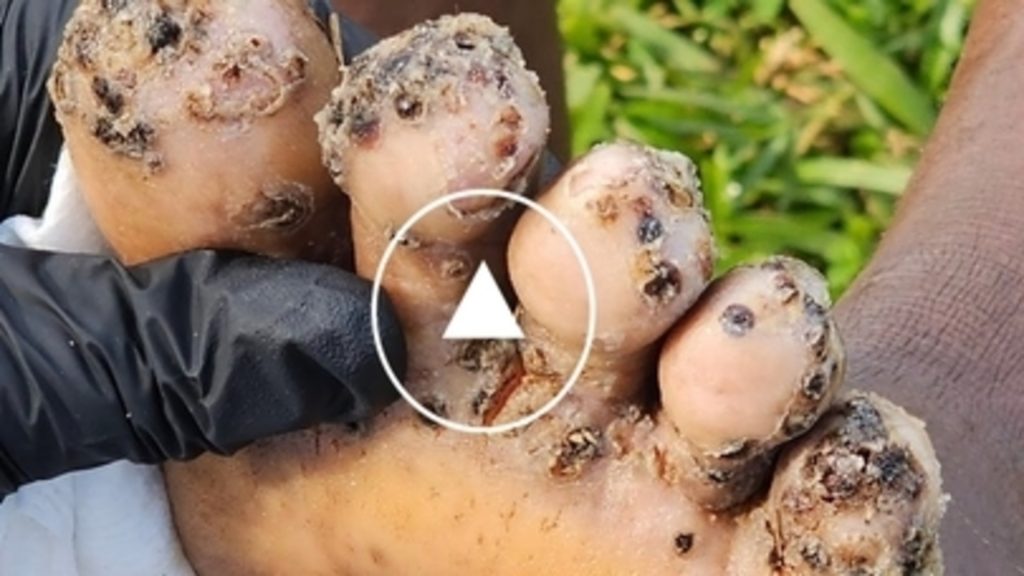
Tungiasis is a parasitic skin infestation caused by a small flea known as Tunga penetrans. The condition can cause irritation and discomfort and most often affects exposed areas of the feet.
Understanding what happens beneath the skin can help explain why a tiny parasite can sometimes cause significant symptoms.
How Does the Parasite Enter the Skin?
The flea can come into contact with exposed skin when a person walks barefoot on contaminated ground.
The female flea can then penetrate the skin and remain embedded while it develops. The body’s immune system responds to the parasite, which can result in inflammation around the affected area.
How Does the Skin React?
The skin may develop a small raised lesion. It can become itchy, red, swollen, or painful.
The reaction can vary from person to person. Some people may have only a small number of lesions, while others can develop multiple affected areas.
Why Can Multiple Jiggers Be a Problem?
When several parasites affect the feet at the same time, the combined inflammation can make walking uncomfortable.
Repeated scratching can also damage the skin. Once the skin barrier is broken, bacteria can enter the wound and cause a secondary infection.
Possible Warning Signs
People should pay attention to symptoms such as:
- Increasing pain
- Significant swelling
- Spreading redness
- Pus or unusual discharge
- Increasing warmth around the lesion
- Difficulty walking
- Multiple painful lesions
These symptoms can indicate that professional medical assessment may be necessary.
Why Is Proper Care Important?
Trying to remove a parasite with an unclean needle, pin, knife, or other sharp object can cause additional injury.
It can also introduce bacteria into the skin and make an existing problem worse.
Professional medical care provides a safer way to assess and manage the condition.
Reducing the Risk of Tungiasis
Simple habits can help reduce exposure to jigger fleas.
Wearing footwear is one of the most useful protective measures. People should also avoid walking barefoot in environments where tungiasis is known to occur.
Keeping the feet clean and checking them regularly can help identify unusual lesions early.
Conclusion
Jiggers are small parasites that can cause inflammation and discomfort when they become embedded in the skin. Early recognition and appropriate care can help reduce the chance of complications.
If a suspicious lesion becomes painful, swollen, or infected, seeking professional medical advice is recommended.
Disclaimer: This article is intended for general educational purposes and should not replace advice from a qualified healthcare professional.